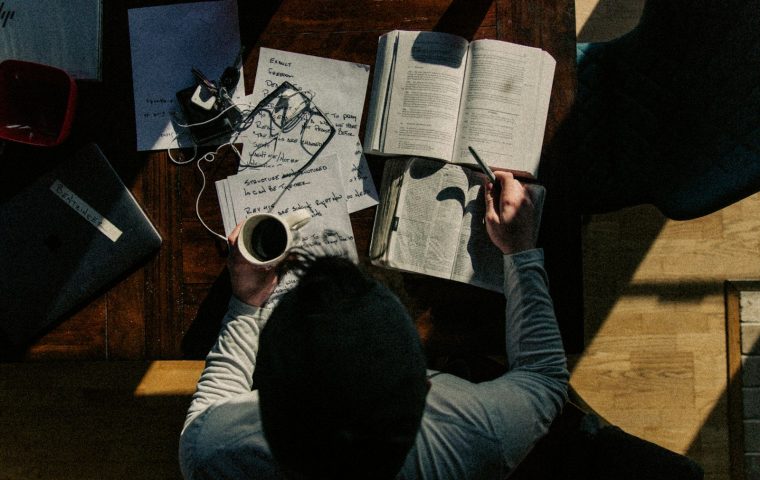


Last spring, a student named Priya showed me three notebooks from the same biology course. One was a wall of sentences copied almost word for word from the slides. The next was a tidy outline she never reopened. The third, started in week eight, was full of little questions in the margins and short summaries at the bottom of each page. Guess which one matched her best exam score.
She had assumed the problem was her memory. It was really her method. The way you capture information shapes how well your brain files it away, and most of us were never taught more than one approach.
So here are seven note taking methods worth trying, each with the kind of class it suits and the trap it tends to set. Pick one to test for two weeks, not all seven at once.
1. The Cornell Method
The Cornell method splits your page into three zones: a wide column for notes during class, a narrow left margin for cue words or questions, and a strip at the bottom for a summary you write later. The structure does the remembering work for you.
It shines in lecture-heavy courses where ideas build on each other, like psychology or history. The cue column quietly turns your notes into a self-quiz, which is the part that strengthens recall.
Leave the cue column and the summary blank during class. Fill them within a day, while the lecture is still fresh but you are forced to recall rather than copy.
The common mistake is treating the summary strip as decoration. If you skip it, you have a nicely formatted page that does no more for your memory than ordinary notes.
2. The Outline Method
This is the one most students already use without naming it. Main topics sit on the left, supporting points indent underneath, and details indent again. It mirrors how organized lectures are usually structured.
Outlining works beautifully when your professor is logical and linear, marching through clear headings. It falls apart in fast, jumpy discussions where you cannot tell the main point from the aside until later.
The recall benefit comes from the hierarchy itself. Deciding what is a major idea versus a minor detail forces a small judgment call, and those judgments are what your brain remembers.
3. The Mapping Method
Mapping, sometimes called mind mapping, puts a central concept in the middle of the page and branches outward into related ideas. Lines connect things, and the connections are the point.
It fits visual thinkers and subjects built on relationships, like the causes and effects in a history unit or the systems in an anatomy class. Seeing how concepts link helps you reconstruct the whole picture from one branch during a test.
If you struggle to start studying at all, mapping can feel less intimidating than a blank lined page. That small lowering of resistance pairs well with the habits in our guide on how to beat procrastination when studying.
Be warned that maps get messy fast in a quick lecture. Many students map afterward, rebuilding their linear notes into a diagram, which doubles as a powerful review session.
4. The Charting Method
When information sorts neatly into categories, a chart beats sentences every time. You set up columns ahead of class and drop facts into the right cells as they come up.
Think comparison-heavy material: wars by date and outcome, drugs by class and side effect, literary movements by traits. The table format makes patterns jump out that prose would bury.
| Method | Best class type | Main recall trigger |
|---|---|---|
| Cornell | Structured lectures | Self-quiz cues |
| Mapping | Relationship-based topics | Visual connections |
| Charting | Comparison-heavy material | Pattern spotting |
The catch is setup. If you guess the wrong columns before class, you spend the hour wrestling your chart instead of listening. Charting rewards a quick glance at the syllabus or last lecture first.
5. The Sentence Method
The sentence method is the simplest one here. You write each new fact or idea as its own numbered line, one thought per line, in the order they arrive.
It is the safety net for fast talkers and disorganized lectures, the classes where any structured system would leave you scrambling. You capture everything now and impose order later.
On its own, it does the least for recall, because it is mostly transcription. Its real value is as raw material. Pair it with a rewrite into Cornell or a map that evening, and the second pass is where the learning lands.
6. The Outline-Plus-Recall (Active Recall) Method
This blends light note taking with retrieval practice. You take brief notes during class, then close them and write down everything you remember from memory before checking what you missed.
The act of pulling information out of your head, rather than pushing it in again by rereading, is one of the most reliable ways to strengthen memory. Your notes become a checklist, not the main event.
This method feels harder and slower than highlighting, and that discomfort fools many students into thinking it is not working. The struggle is the mechanism. Reread-only studying feels productive and remembers little.
It pairs naturally with revisiting your recall gaps on a schedule, which is the idea behind spaced repetition explained simply. Note today, recall tomorrow, review again next week.
7. The Flow Method
Flow notes throw out neat structure on purpose. You write in your own words, draw quick arrows, paraphrase as you go, and treat the page as thinking rather than recording.
It works best in conceptual courses where understanding matters more than capturing every term, and when the slides are posted anyway so you need not transcribe them. You are learning during the lecture, not just collecting for later.
The downside is real. Flow notes can be thin if a detail-heavy exam arrives, and they are hard to share with a classmate who missed class. Use it when comprehension is the goal, not coverage.
Structured lecture, pick Cornell or outline. Comparison material, chart it. Concept-heavy and slides posted, try flow. Fast and chaotic, sentence now and rewrite later. Want the strongest memory effect, add active recall to whatever you choose.
One more thing worth saying plainly. The "best" method depends as much on your school setting as your brain. A discussion-driven seminar at a small community college versus a large university lecture hall asks for very different note taking, and matching your method to the room matters more than chasing the trendiest system.
Should I take notes on paper or a laptop?
Either works, but paper tends to slow you down just enough that you paraphrase instead of transcribe, which helps recall. If you type, set a rule to write in your own words rather than copying the speaker word for word.
How long should I spend reviewing my notes after class?
Even 10-15 minutes the same day makes a real difference. Use it to fill cue columns, write a summary, or do a quick recall pass while the lecture is still fresh.
Can I mix more than one method?
Yes, and many strong students do. A common combination is capturing with the sentence method live, then rewriting into Cornell or a map that evening so the second pass doubles as study time.
Try one method for two full weeks before you judge it, since the first few days always feel clumsy. Pay attention to which one makes review feel easier, not which one looks neatest on the page. That small, honest experiment will tell you more than any list could, and you can always switch when the next class calls for something different.